Why I Moved the Mirror Off My Bedroom Wall (and It Actually Changed My Sleep)
A blogger shares how a simple mirror repositioning—prompted by a friend's offhand comment—led to noticeably better sleep and a calmer morning routine.
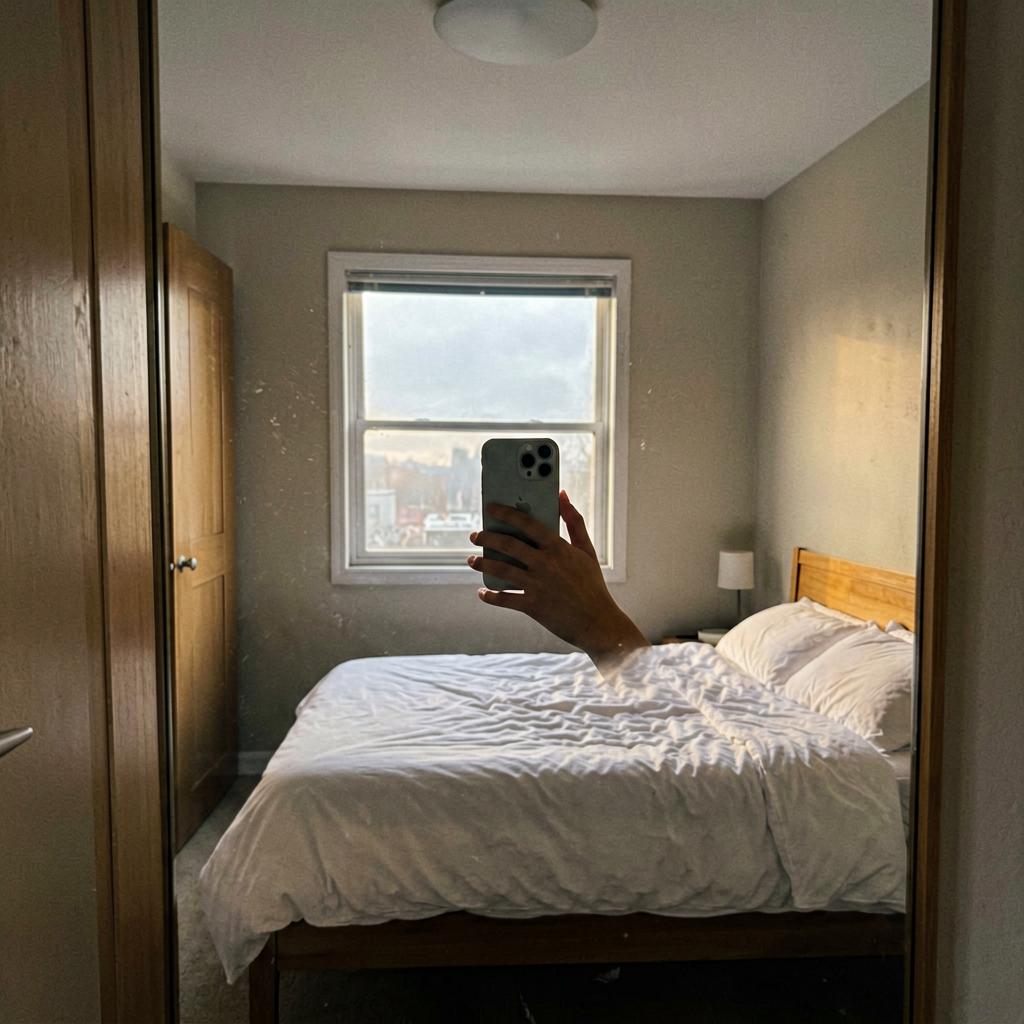
Location
Austin, Texas, United States
Property Type
Apartment
Room
Bedroom
Direction
West
The Problem
I hadn't slept through the night in months. I'd wake up at 3 AM, heart racing, for no reason. My doctor said stress. My therapist said anxiety. My cat said feed me at 4 AM. But I couldn't shake the feeling that my bedroom itself felt... off.
What They Tried
One evening, a friend who's into interior design came over and said, 'You know, that mirror reflecting your bed is a classic no-no. It's like your brain never gets to switch off—it sees movement, shadow, itself.' I laughed, but later, I moved the full-length mirror from the wall opposite my bed to the inside of my closet door. It took five minutes and a bit of grumbling about scratched floors.
What Happened
Within a week, I wasn't waking up at 3 AM. I still wake up early—my brain is wired that way—but it's not that jolting, anxious type of awake. I feel like I actually rested. The room looks bigger without the mirror, and my morning routine is less creepy—I don't catch my own sleepy-eyed reflection in the dark anymore. It's a small thing, but it's made a surprisingly big difference.
Spatial Orientation
| Bagua Sector | 兑 ☱ · Dui |
|---|---|
| Direction | West |
| Element | metal |
What works best here
Dui (7) · Metal. West should be lower and more open than East for left-right equilibrium.
Place: low cabinets, metal decor (brass, copper, steel), round shapes, white and grey tones.
Recommended crystal
Clear Quartz or Selenite — placed on a low console or side table in the west
Round shapes and metallic finishes feel especially at home on this side of the room
Source Analysis
1. The Original Principle
Original Text
Aunque no existan ventanas o puertas apuntando hacia un espejo, no se deben ubicar espejos reflejando la cama, ni tampoco deben colocarse dos espejos uno enfrente del otro, porque esto creará energía negativa en el espacio entre ellos.
2. About the Source
Integración de espacios y ubicación universidad dr jose matias delgado by Universidad Dr. José Matías Delgado · El Salvador · 2010
Space Integration and Site Planning is an academic publication from Dr. José Matías Delgado University in El Salvador. It explores the relationship between spatial arrangement, architectural design, and occupant wellbeing from a Latin American perspective, combining principles of environmental psychology with practical site planning methodology.
3. How This Principle Applies to This Case
The classical principle advising against mirrors reflecting the bed stems from an observation that such placements can create a sense of unease or visual 'noise' in a resting space. Modern psychology supports this: our peripheral vision is highly sensitive to motion and light, and a mirror reflecting a dark room or dim shapes can trigger a low-level alert response, especially during the night. By moving the mirror out of the direct line of sight from the bed, the brain's environment becomes more predictable, reducing subconscious vigilance. This aligns with the principle's aim to minimize disruptive stimuli in spaces meant for rest and recovery.
Bring the Purest Energy Into Your Home
Sourced from altitudes above 4,000 meters in the Himalayan range — the highest place on Earth and the closest to the sun. These crystals formed over millions of years in some of the planet's most pristine conditions, untouched by industrial pollution. Each piece carries the raw, unfiltered energy of the mountains. Whether placed on a nightstand, a desk, or a meditation corner, they serve as a quiet anchor — a daily reminder to pause, breathe, and reconnect.
Explore the HIMA ALAÏA collection →Case source
Nicolette Vajtay
Feng Shui consultant helping clients transform their homes through intentional spatial design.