Why I Put the Water Heater in the Closet Nobody Used: A Realtor's Tale of a House That Kept Falling Apart
A realtor shares how shrinking a neglected corner of a client's home—by relocating the water heater into it—stopped a run of bad luck and made the house sell in a week.
Location
Denver, United States
Property Type
House
Room
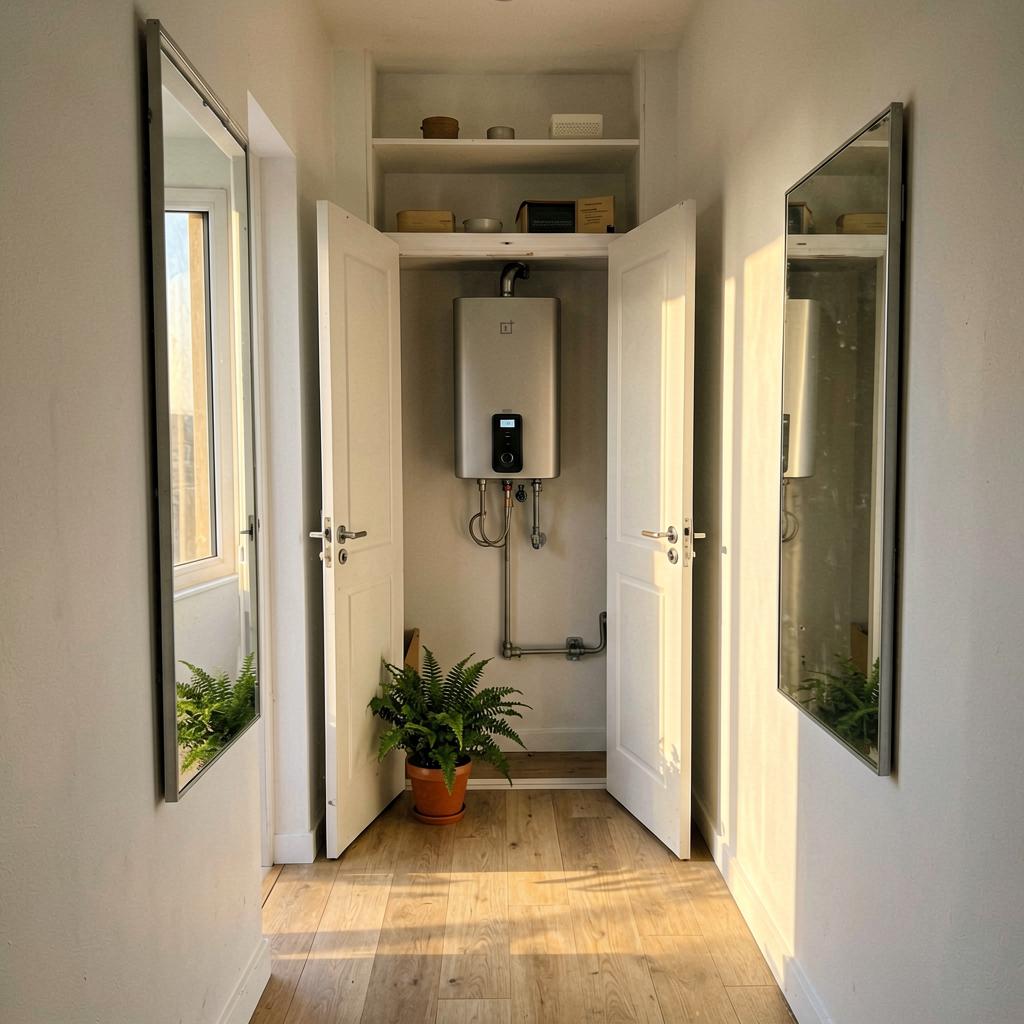
Hallway Closet
Direction
West
The Problem
The Johnsons' house was a nightmare. Every time they fixed one thing, another broke. The roof leaked, the boiler died, and the garden shed collapsed. They were convinced the place was cursed.
What They Tried
I noticed a wasted, oversized closet off the hall—a dead space that collected junk and bad vibes. I suggested we shrink it by moving the bulky water heater in there, freeing up the garage for storage and giving the house a cleaner layout.
What Happened
Within a month, the house felt lighter. The Johnsons stopped joking about the curse, and when they listed, we had three offers in a week.
Spatial Orientation
| Bagua Sector | 兑 ☱ · Dui |
|---|---|
| Direction | West |
| Element | metal |
What works best here
Dui (7) · Metal. West should be lower and more open than East for left-right equilibrium.
Place: low cabinets, metal decor (brass, copper, steel), round shapes, white and grey tones.
Recommended crystal
Clear Quartz or Selenite — placed on a low console or side table in the west
Round shapes and metallic finishes feel especially at home on this side of the room
Source Analysis
1. The Original Principle
Original Chinese
刑祸之方缩复缩,犹恐灾殃枉相逐;福德之方拓复拓,子子孙孙受荣乐。
English Translation
A classical text advises that areas associated with misfortune should be reduced—made smaller, lower, and less prominent—while areas of good fortune should be expanded, to invite prosperity and harmony.
2. About the Source
宅经 by Attributed to the Yellow Emperor · China · Tang Dynasty (618–907 CE), based on earlier traditions
The Classic of Dwellings is one of the earliest surviving Chinese texts dedicated entirely to residential architecture. It presents a holistic view of the home as a living organism — comparing the house to a body with its own anatomy of walls, doors, rooms, and courtyards. Its core teaching is that a well-arranged home supports the health and fortune of its inhabitants as naturally as good soil supports healthy plants.
3. How This Principle Applies to This Case
This case applies the principle of shrinking a 'misfortune' zone—here, a cluttered dead corner—by repurposing it for a functional but hidden utility. Psychologically, the act of clearing and confining a chaotic space reduces visual noise and subconscious stress, which the homeowners felt as 'lighter.' The sale success likely stems from improved first impressions, as buyers respond to order and flow. The principle's core—minimize what's negative, amplify what's positive—aligns with modern staging practices that declutter and highlight strengths.
Bring the Purest Energy Into Your Home
Sourced from altitudes above 4,000 meters in the Himalayan range — the highest place on Earth and the closest to the sun. These crystals formed over millions of years in some of the planet's most pristine conditions, untouched by industrial pollution. Each piece carries the raw, unfiltered energy of the mountains. Whether placed on a nightstand, a desk, or a meditation corner, they serve as a quiet anchor — a daily reminder to pause, breathe, and reconnect.
Explore the HIMA ALAÏA collection →Case source
Dana
Modern Feng Shui content creator sharing practical spatial tips for everyday life.