Why I Shifted My Desk Away From the Window and My Work Anxiety Finally Calmed Down
A designer shares how moving her home office desk just a few feet changed her focus and stress levels—no mystical explanation required.
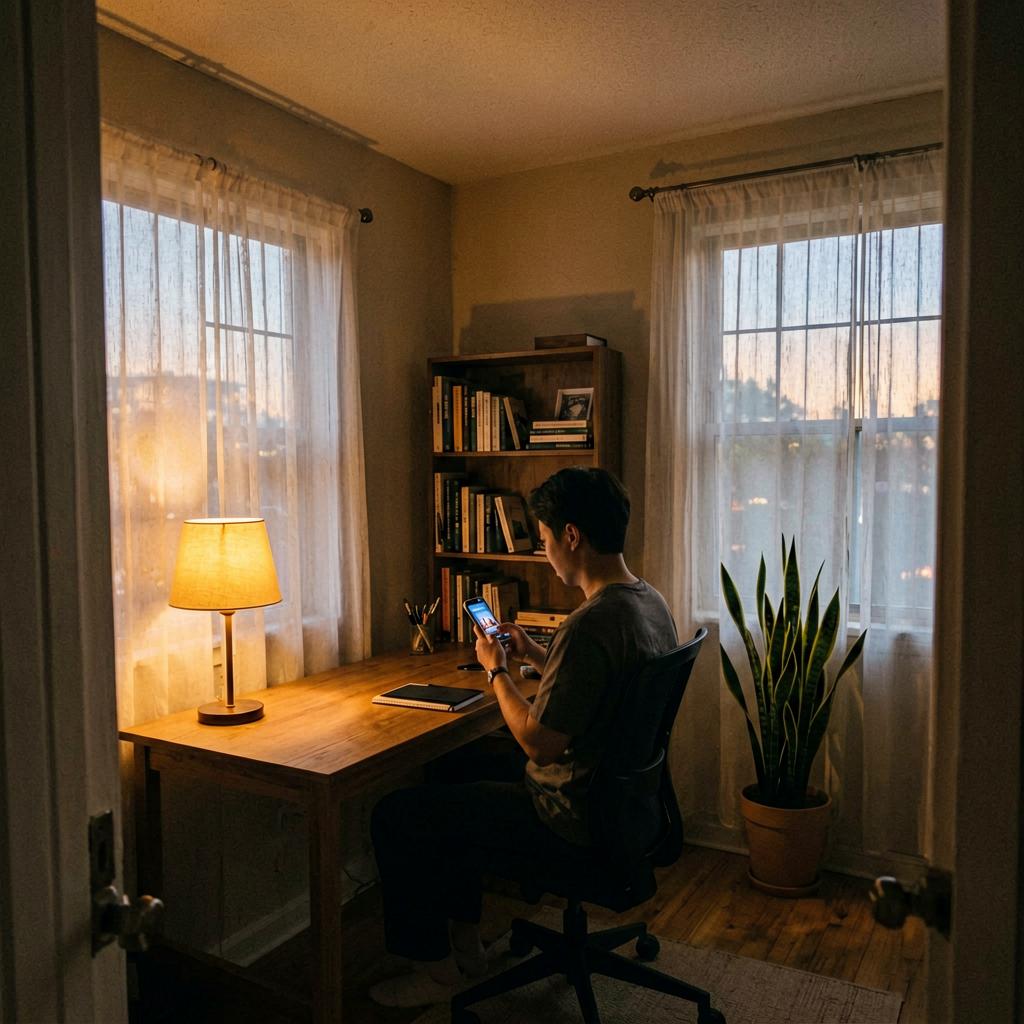
Location
Portland, Oregon, United States
Property Type
House
Room
Home Office
Direction
North
The Problem
I had been working from home for about a year, and my home office—a spare room I'd converted with a desk, a bookshelf, and a potted plant—was starting to feel like a trap. Every afternoon, around 2 PM, I'd hit a wall. My shoulders would creep up to my ears, my jaw would tighten, and I'd find myself staring at the same email for twenty minutes without reading it. At first I blamed the caffeine or the lack of a lunch break. But it was happening every single day, like clockwork.
What They Tried
One weekend, I decided to shift everything. I moved my desk from its spot against the wall facing the window—where the light poured in and the neighbors' kids played in the yard—to a position where my back was to the window and I faced the door. I also pulled my desk about 30 centimeters away from the wall, so I wasn't cramped against it. I repositioned the bookshelf to create a sort of visual shield behind me, and I placed a small lamp on the corner of the desk to warm up the space.
What Happened
The change was almost immediate. Within two days, I noticed I wasn't dreading the afternoon slump. My posture relaxed because I wasn't squinting into the glare. Facing the door meant I could see anyone coming in, which sounds trivial, but it made me feel less on edge. I stopped checking my phone as much, and my focus sessions stretched from 45 minutes to over an hour. It wasn't a miracle—I still have busy days—but the constant low-grade anxiety I'd been carrying around the room just... faded.
Spatial Orientation
| Bagua Sector | 坎 ☵ · Kan |
|---|---|
| Direction | North |
| Element | water |
What works best here
Kan (1) · Water. North side can be slightly taller than South for a grounded feel.
Place: dark-colored ceramics, stone objects, heavy bookshelves.
Recommended crystal
Black Obsidian or Smoky Quartz — placed on a low table or shelf in the north corner
A solid, weighty presence here helps the room feel anchored and secure
Source Analysis
1. The Original Principle
Original Chinese
九星生旺方位:贪狼居北主荣昌,巨门到火子孙强。武曲最宜临土位,各居本位亦生祥。惟有六煞文曲水,中央受制不为殃。
English Translation
The eight mansions mirror, written in the Qing dynasty, observes that each of nine star positions has a direction where it thrives. The greedy wolf star in the north brings prosperity, the giant gate star in the south strengthens descendants, and the military star is best in the earth center. A star in its proper place brings good fortune.
2. About the Source
八宅明镜上卷 by Yang Yunsong (attributed) · China · Qing Dynasty (1644–1912 CE)
The Eight Mansions Bright Mirror is one of the most influential classical Chinese texts on residential architecture. For over three centuries, it has served as a foundational reference for understanding how the layout and orientation of living spaces affect the wellbeing of their inhabitants, focusing on how living spaces can be arranged to support health, relationships, and prosperity.
3. How This Principle Applies to This Case
This case illustrates a simple spatial principle: the position of a desk relative to light and doorways affects a person's sense of safety and control. The classical text's emphasis on star placement mirrors a modern understanding of environmental psychology—when we sit with our back exposed or face glare, our nervous system registers 'threat,' raising stress hormones. By turning to face the door and reducing visual noise, the designer created a 'command position' that lowered her vigilance, improving focus and reducing anxiety. The principle isn't mystical; it's about aligning the environment with basic human comfort needs.
Bring the Purest Energy Into Your Home
Sourced from altitudes above 4,000 meters in the Himalayan range — the highest place on Earth and the closest to the sun. These crystals formed over millions of years in some of the planet's most pristine conditions, untouched by industrial pollution. Each piece carries the raw, unfiltered energy of the mountains. Whether placed on a nightstand, a desk, or a meditation corner, they serve as a quiet anchor — a daily reminder to pause, breathe, and reconnect.
Explore the HIMA ALAÏA collection →Case source
Balanced Environments
Founded by Francoise Courty-Danota, a French-born Feng Shui master now based in the US. Combines European Geobiology (detecting underground water veins and electromagnetic radiation) with classical Chinese Feng Shui for premium healthy home planning.