Why I Stopped Worrying About The Perfect House And Just Moved In — A Home Office Story
A freelance writer was paralyzed by house-hunting anxiety until a designer friend gave her one piece of advice that changed everything.
Location
Portland, Oregon, United States
Property Type
Apartment
Room
Home Office
Direction
East
The Problem
I spent six months looking for a home office. Every house I saw had something wrong — the light was off, the layout felt awkward, the ceiling was too low. I'd read a dozen articles about 'ideal workspaces' and convinced myself that if everything wasn't perfect, I'd never be productive. Meanwhile, I was working from my kitchen table, my back ached, my focus was shot, and I was losing clients because I couldn't meet deadlines.
What They Tried
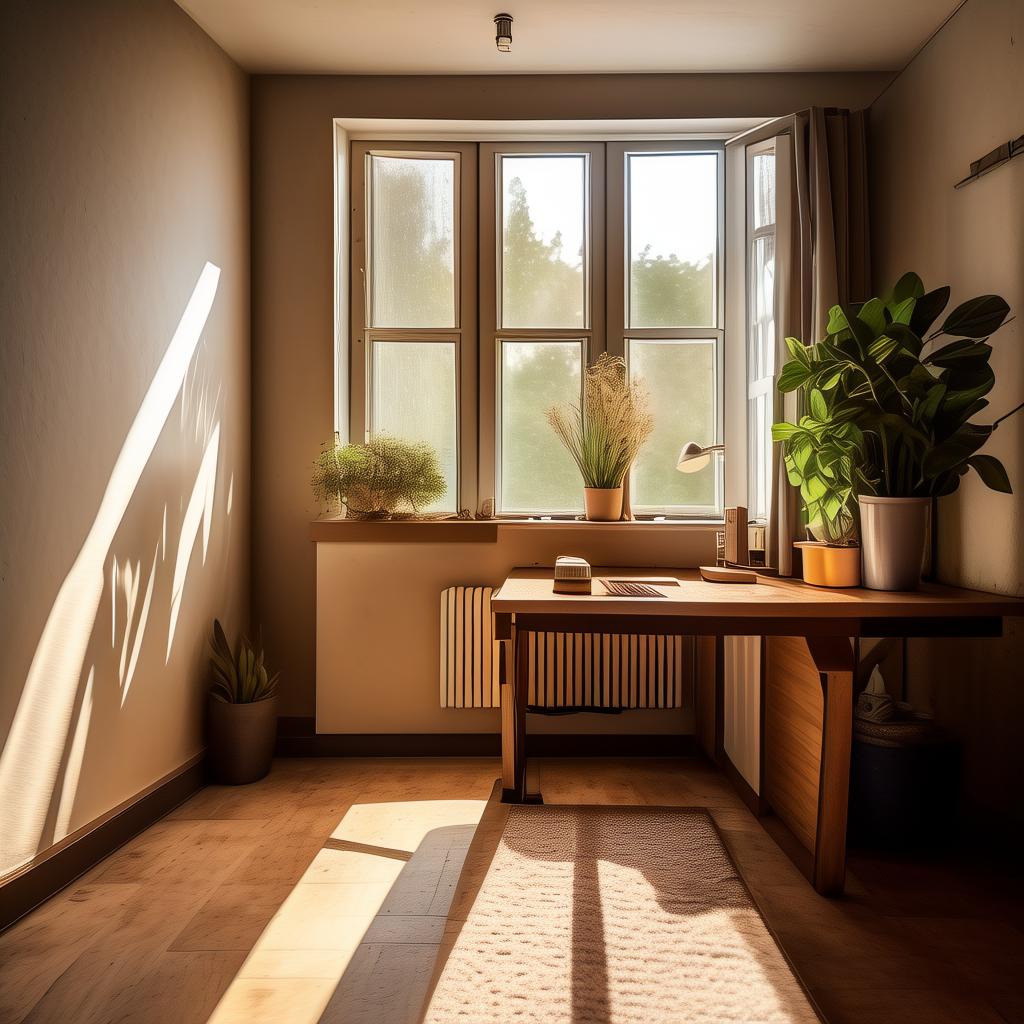
My friend Laura, an interior designer, came over one afternoon. She looked at my kitchen setup, then at my frantic search history. 'You're overthinking this,' she said. 'Find a house with a room that has a door and a window facing east — good natural light in the morning. That's it. Don't worry about the rest.' I thought she was crazy. But I found a small apartment with a spare bedroom that had exactly that: an east-facing window. The room was narrow, the closet was tiny, and the paint was a hideous beige. I moved my desk in anyway.
What Happened
It worked. Within two weeks, I was getting more done than I had in months. The morning light genuinely helped me wake up. Having a door — any door — meant I could close it and focus. The beige walls? I stopped noticing them after day three. I stopped obsessing over the 'perfect' space and started using the good one I had. My productivity went up, I met my deadlines, and I actually enjoyed working again.
Spatial Orientation
| Bagua Sector | 震 ☳ · Zhen |
|---|---|
| Direction | East |
| Element | wood |
What works best here
Zhen (3) · Wood. East should be the tallest area of the room when possible.
Place: tall plants (especially bamboo or fiddle-leaf fig), wooden furniture, green accents.
Recommended crystal
Green Aventurine or Moss Agate — placed near a window or on a plant shelf in the east
This is the growth sector — plants thrive here and vertical elements feel natural
Source Analysis
1. The Original Principle
Original Chinese
临官生旺胎养墓,不须更论阴阳疵。
English Translation
When a site is in a favorable position — such as the phases of growth, peak, nourishment, or storage — there is no need to scrutinize minor flaws in its yin-yang balance. The core strength of the location outweighs small imperfections.
2. About the Source
催官篇卷之一 评龙章 by Lai Buyi · China · Song Dynasty (960–1279 CE)
The Promotion Classic is a Song Dynasty text focused on how the spatial arrangement of landforms and water features around a dwelling can influence the career advancement and social recognition of its occupants. It combines Form School landscape analysis with the Bagua directional framework, offering practical guidance on site evaluation that has been consulted by scholars and officials for centuries.
3. How This Principle Applies to This Case
This case illustrates a principle from classical spatial analysis: when a site has a fundamentally positive characteristic (in this case, an east-facing window providing morning light and a room with a door for enclosure), minor imperfections (narrow dimensions, poor paint color) do not undermine its function. Modern environmental psychology supports this: natural light improves circadian rhythm and mood, while a defined boundary (a door) reduces cognitive load by creating a clear work/rest separation. The homeowner's previous obsession with 'perfect' conditions was actually a form of decision paralysis — once she accepted a 'good enough' space with one strong positive feature, her performance improved. The principle here is about prioritizing the essential over the ornamental.
Bring the Purest Energy Into Your Home
Sourced from altitudes above 4,000 meters in the Himalayan range — the highest place on Earth and the closest to the sun. These crystals formed over millions of years in some of the planet's most pristine conditions, untouched by industrial pollution. Each piece carries the raw, unfiltered energy of the mountains. Whether placed on a nightstand, a desk, or a meditation corner, they serve as a quiet anchor — a daily reminder to pause, breathe, and reconnect.
Explore the HIMA ALAÏA collection →Case source
Amanda Gibby Peters
Founder of Simple Shui. De-mystifies Feng Shui for the modern American lifestyle with warmth and humor.