Why Our 400 Sq Ft Studio Finally Stopped Feeling Like a Claustrophobia Cage
We moved our bed 4 feet and our tiny studio suddenly felt twice as big. No magic, just geometry.
Location
Brooklyn, NY, United States
Property Type
Studio Apartment
Room
Studio
Direction
North
The Problem
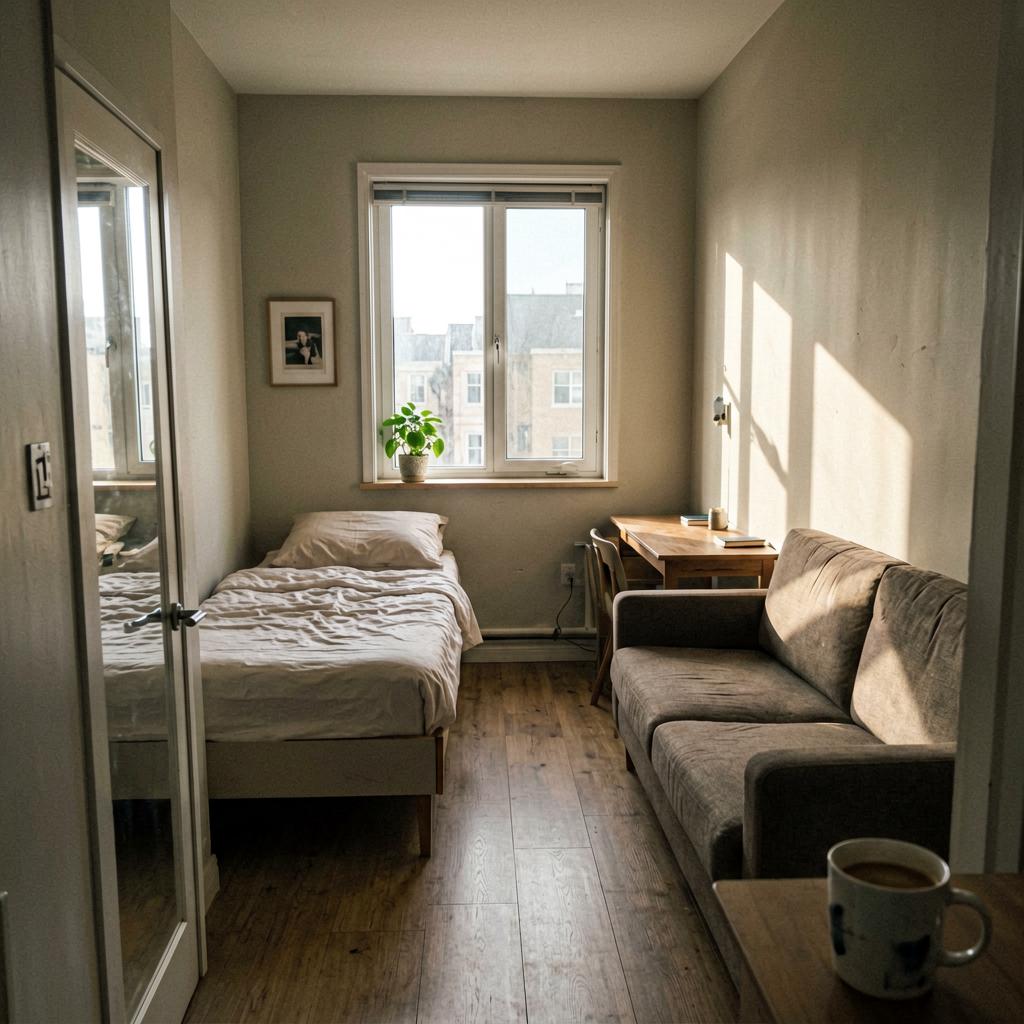
We live in a 400 sq ft studio. It was fine for about a year. Then it started feeling like the walls were closing in. Every time I sat on the couch, I felt trapped. My wife couldn't relax either. We'd snap at each other over nothing. The bed took up half the room, the desk was crammed in the corner, and the whole place felt like a storage unit with a mattress.
What They Tried
We moved the bed. It was against the wall, right next to the door. Every time someone walked in, they had to squeeze past it. We shifted it 4 feet to the opposite wall, facing the window. Then we moved the desk to where the bed used to be. Took maybe 20 minutes total. That's it. Nothing else changed.
What Happened
The room immediately felt bigger. The path from the door to the couch was clear. The bed now has a view of the window instead of a wall. We stopped bickering. I don't know if it's the light or the space, but I actually like being in here now. It's not a miracle—it's just a room that makes sense.
Spatial Orientation
| Bagua Sector | 坎 ☵ · Kan |
|---|---|
| Direction | North |
| Element | water |
What works best here
Kan (1) · Water. North side can be slightly taller than South for a grounded feel.
Place: dark-colored ceramics, stone objects, heavy bookshelves.
Recommended crystal
Black Obsidian or Smoky Quartz — placed on a low table or shelf in the north corner
A solid, weighty presence here helps the room feel anchored and secure
Source Analysis
1. The Original Principle
Original Chinese
凡人所居无不在宅,虽只大小不等,阴阳一体,纵然客居一室之中,亦有善恶,大者大说,小者小说,犯者有灾,镇而祸止,犹药病之效也。
English Translation
A classical text on dwellings states that any home, regardless of size, contains both favorable and unfavorable aspects—even a single room matters. Large homes have large concerns, small homes have small ones. When a layout conflicts with this balance, it brings trouble; correcting the arrangement stops the issue, like medicine curing an illness.
2. About the Source
金锁玉关 by Anonymous (private manuscript) · China · Pre-Song Dynasty (before 960 CE)
The Golden Lock and Jade Pass is an esoteric classical text on residential site analysis, passed down through private manuscripts. It provides a systematic method for evaluating how the surrounding landforms — heights, depressions, and water features in each compass direction — shape the experience of a living space. Its sand-and-water framework remains one of the most practical tools in the landscape assessment tradition.
3. How This Principle Applies to This Case
This case reflects a core principle in early spatial analysis: the arrangement of a small space directly affects the occupant's sense of ease. The original studio had a cramped entry path and a bed blocking the main walkway, creating constant micro-stress. Modern environmental psychology supports this—cluttered pathways increase cognitive load and feelings of confinement. By repositioning the bed to open the sightline from the door and placing the desk in a less trafficked corner, the room gained a clear 'flow zone.' The change isn't mystical; it's about reducing visual obstruction and giving the eye a resting point. The couple's reduced irritability aligns with studies that show spatial order lowers cortisol. The principle here is universal: in any dwelling, the layout either supports or undermines daily well-being, regardless of square footage.
Bring the Purest Energy Into Your Home
Sourced from altitudes above 4,000 meters in the Himalayan range — the highest place on Earth and the closest to the sun. These crystals formed over millions of years in some of the planet's most pristine conditions, untouched by industrial pollution. Each piece carries the raw, unfiltered energy of the mountains. Whether placed on a nightstand, a desk, or a meditation corner, they serve as a quiet anchor — a daily reminder to pause, breathe, and reconnect.
Explore the HIMA ALAÏA collection →Case source
Anjie Cho
NYC architect and BTB Feng Shui master. Author and co-founder of Mindful Design Feng Shui School.